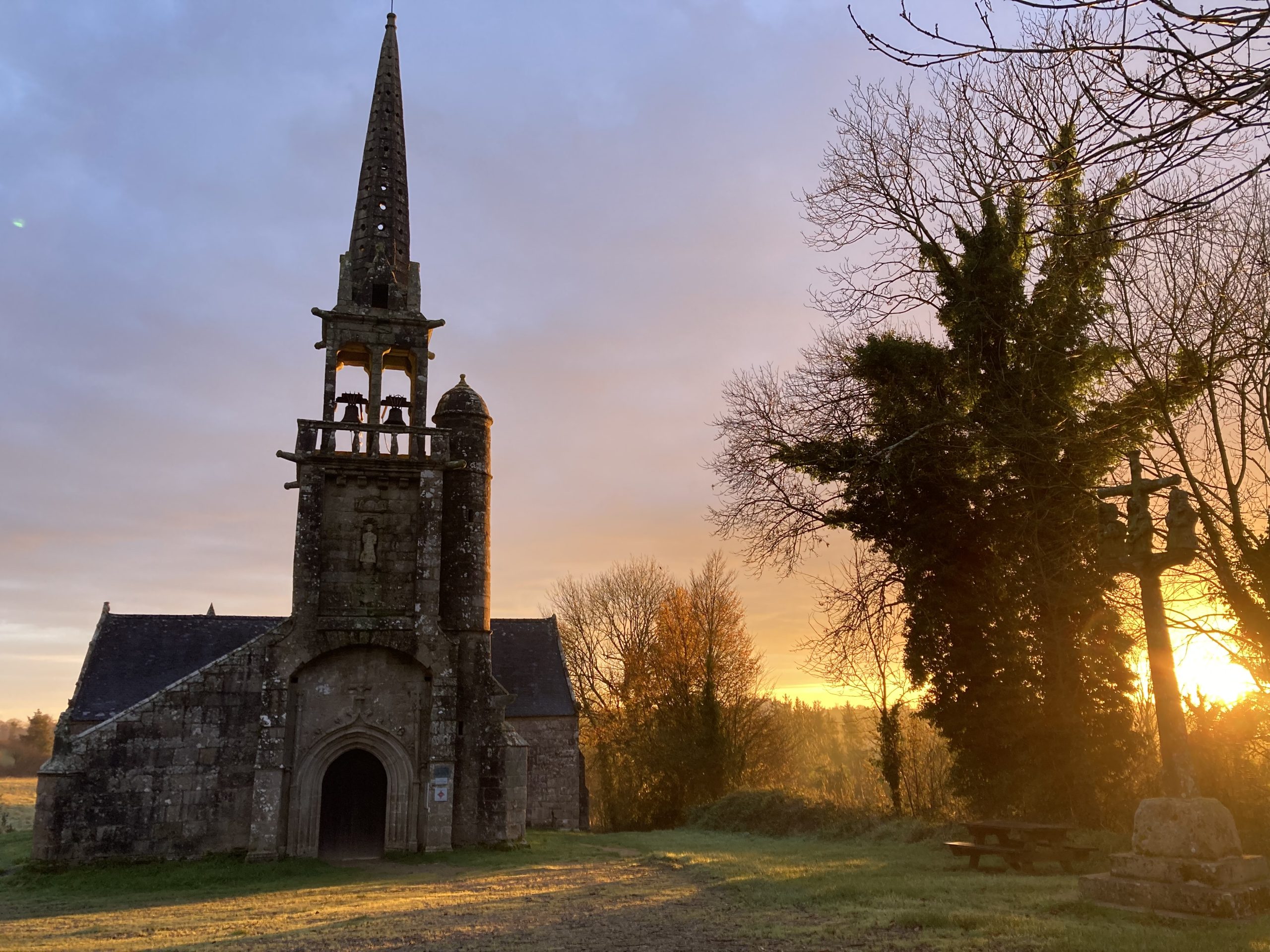
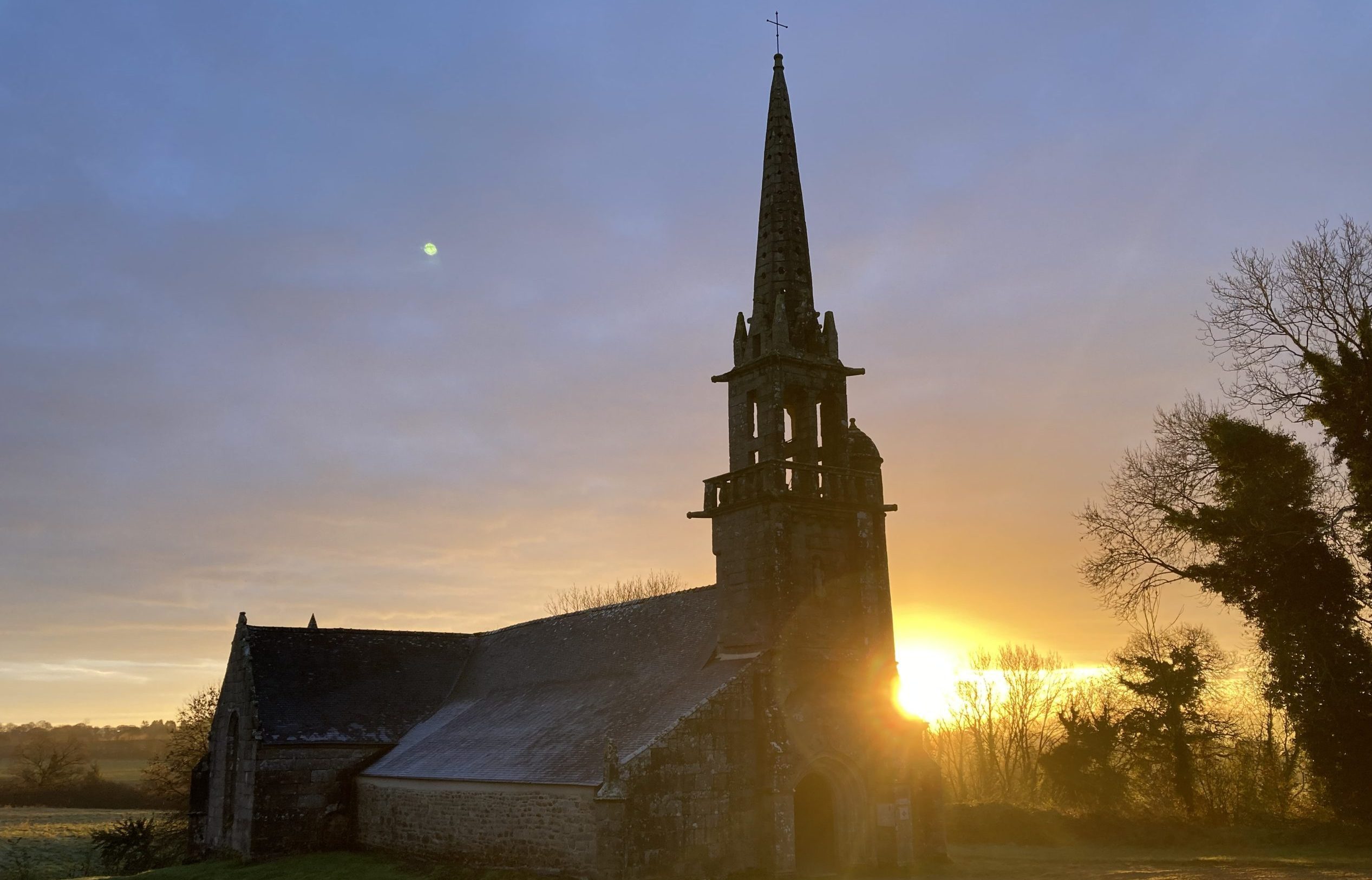
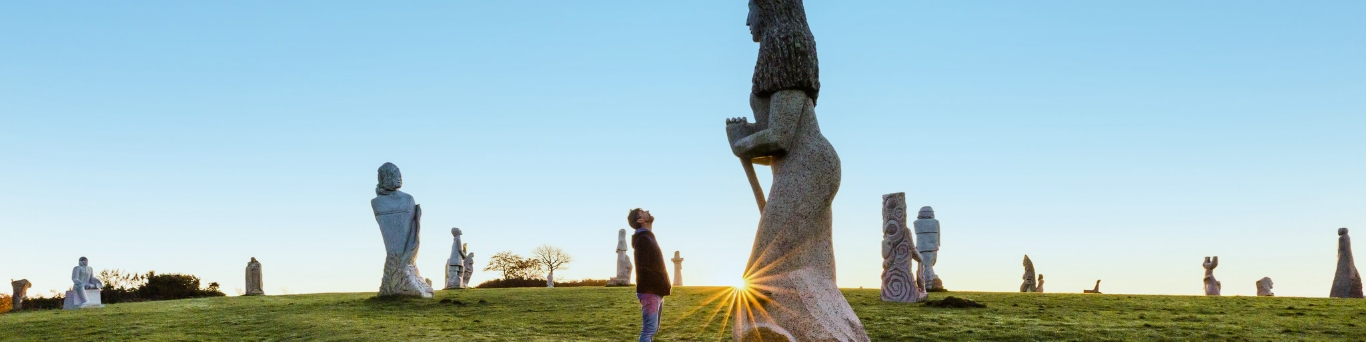
The Chapelle Saint-Gildas is located 300 m below the Vallée des Saints site and can be reached by foot from the site. It is also accessible via the tarmac road that passes in front of the Vallée des Saints and then via a gravel path.

Locating the Saint-Gildas chapel

Behind the chapel is the Saint-Gildas fountain.

History of the chapel

Referred to in some deeds as the “chapel of Monsieur Saint-Gildas” or the “castle chapel”, the present chapel was never actually built at the same time as the “castle”. It was built by the workshop of Philippe Beaumanoir, who was active between 1490 and 1520. If we know the date of the Battle of Marignan, we can place the date of its construction more precisely… In fact, the “gargoyle-cannons” appeared after this battle, so we can place it at the very beginning of the 16th century. A restoration of its bell tower bears the date 1757.

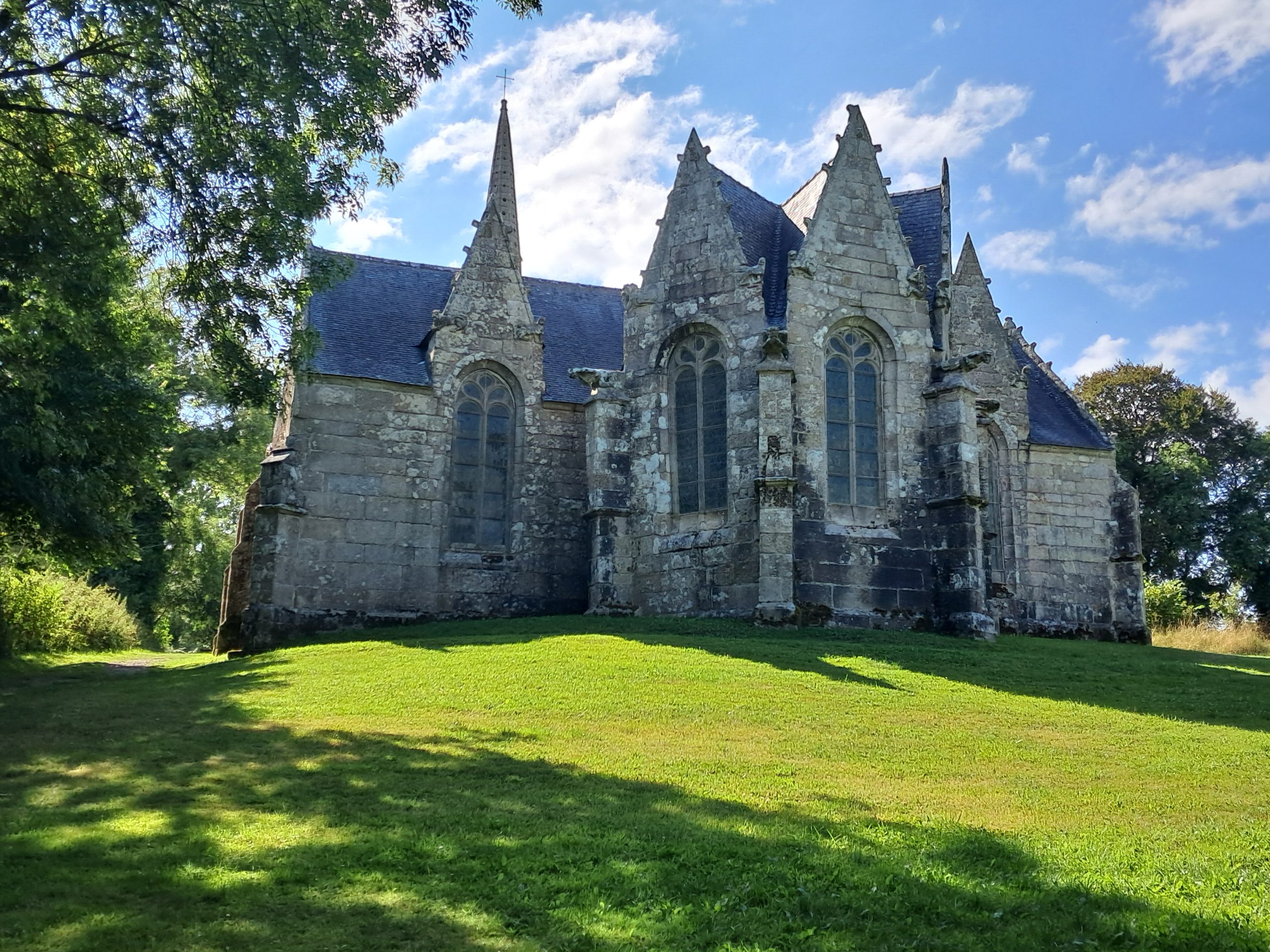
The Beaumanoir style is characterised by a bell tower-wall with buttresses on which a staircase turret is supported, giving access to the bells. The multiple-ribbed apse (or three-sided chevet) is another feature of this style, which can be seen at the back of the chapel. Curious gargoyles in the corners, with chimera figures or inspired by the animal kingdom, reveal the originality and creative freedom of the sculptors in the Morlaix workshop.
stgildas_2

The chapel was listed as a historic monument in 1972, too late to save it from looters. The work bench, the rood beam and the altarpiece have all disappeared. The only statuary to survive was a polychrome angel.

The seigniorial chapel of Carnoët was erected under the authority of the lord of Rostrenen and Pont-l’Abbé. In 1626, this seigneury was transferred by marriage to the nephew of Cardinal de Richelieu; the chapel remained the property of this family until 1703. On that date, Armand Jean de Vignerot du Plessis, the Cardinal’s grand-nephew, sold Carnoët (including the chapel and motte) for 18,500 livres to Charles Fleuriot de Langle, the grandfather of the navigator who died in Papua with Lapérouse.

Find out more about the chapel

The taking of possession took place on 19 and 20 December 1703. “The new lord was taken to Saint-Gildas mountain, the site of the former “Carnot” castle, and from there he descended into the castle chapel, named the chapel of Monsieur de Saint-Gildas, where he was shown the coat of arms of Rostrenen, Argent with three fesses Gules charged with ermine”.

The Fleuriot de Langle family held the seigneury of Carnoët until the French Revolution. In 1780, there were 1,500 communicants for a population of 2,300.

Saint-Gildas

Saint Gildas is the patron saint of the chapel. He is invoked to cure or protect dogs and humans from rabies (considered madness). Here in Carnoët, he was venerated by ploughmen to preserve their tools of the trade, in this case their horses. Several statues of Saint-Gildas can be seen here.

The “Kevredigezh Sant Gweltas” association was set up in December 1998 to preserve both the building and the soul of the area through events, the profits from which are invested in the chapel.

The chapel